
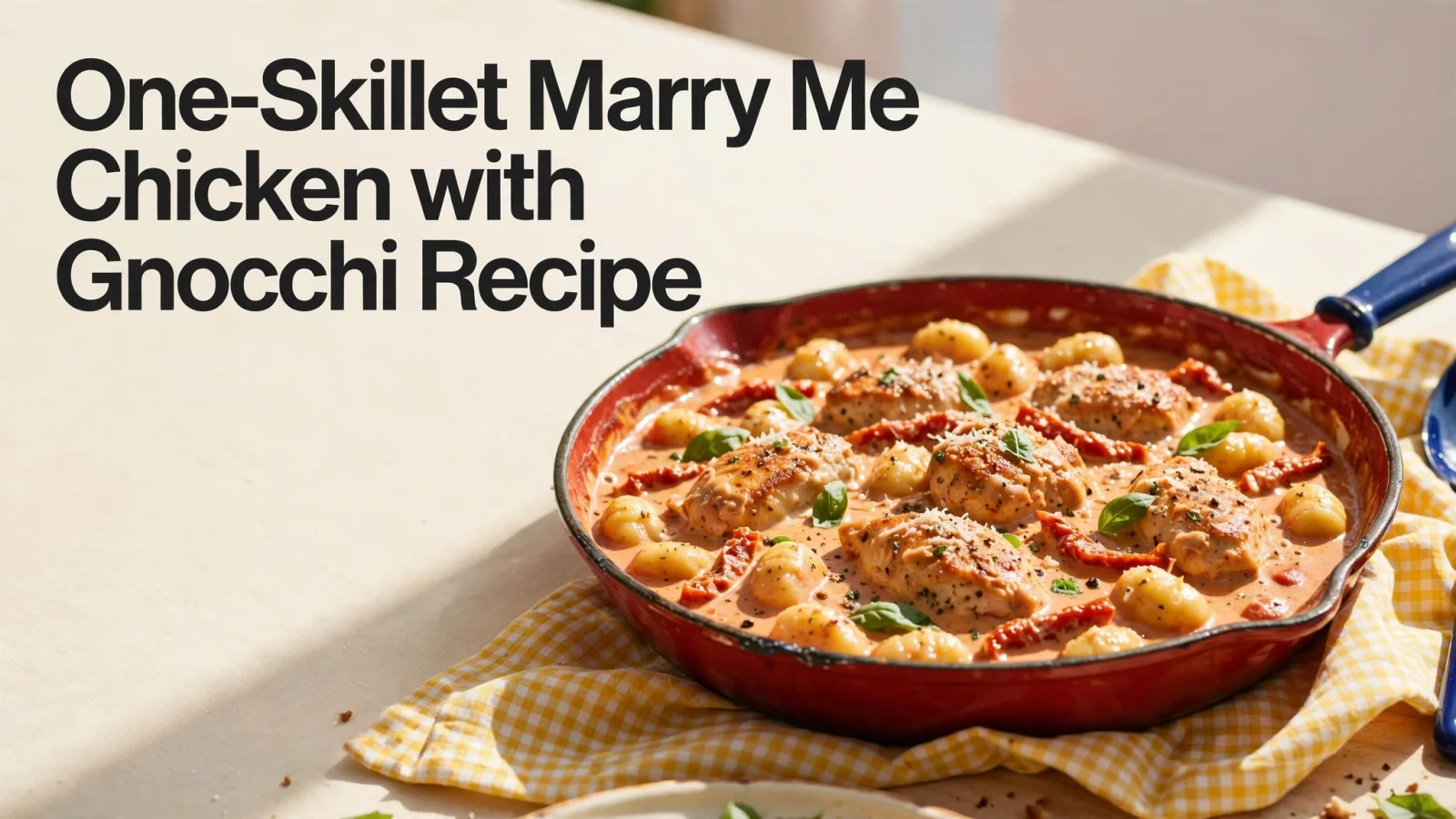
One-Skillet Marry Me Chicken with Gnocchi Recipe
Make marry me chicken with gnocchi in a creamy skillet, with practical swaps and tested tips for tender gnocchi cooked in sauce.
By Buttter ·
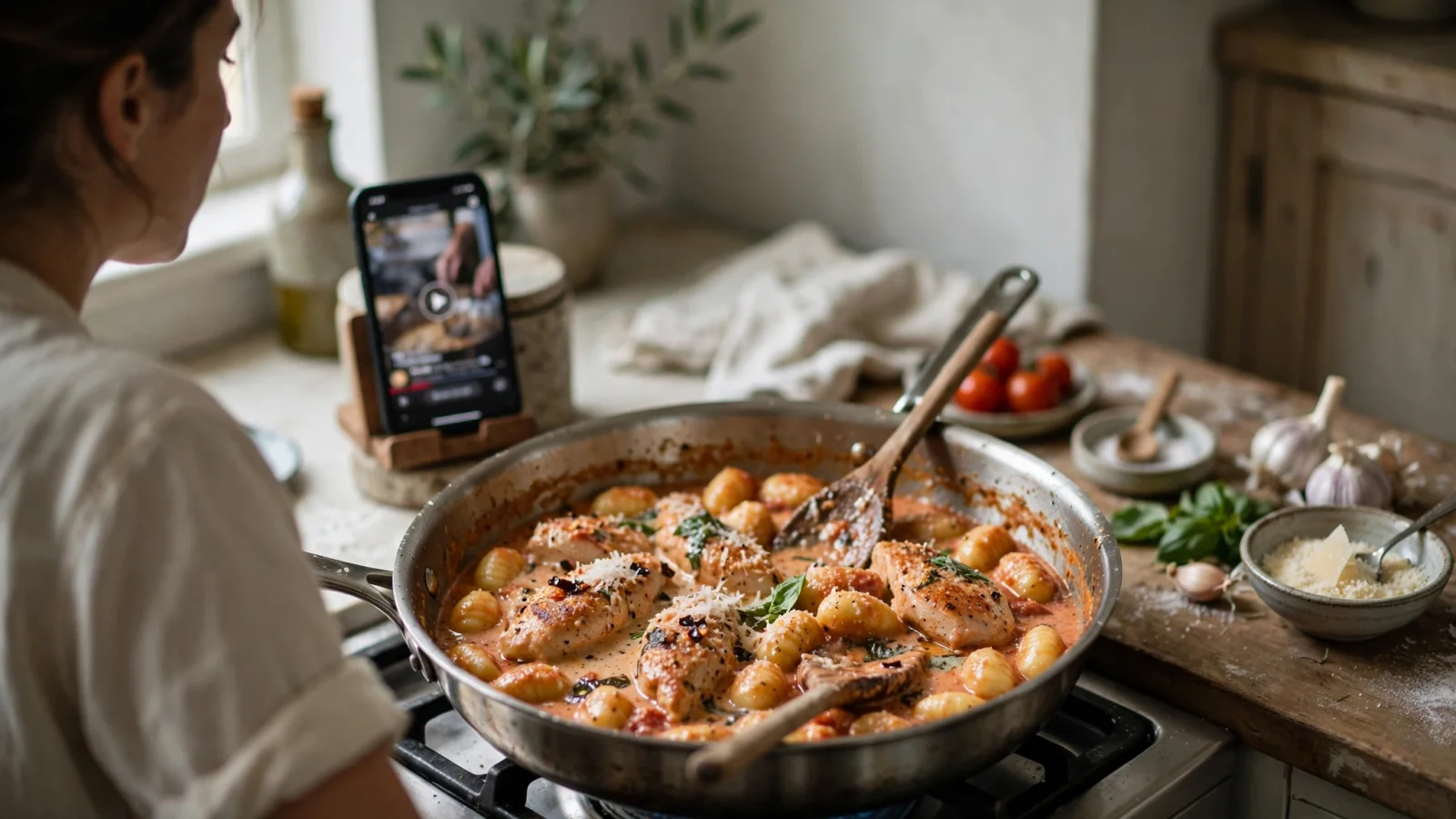
Saving a tempting cooking video takes one tap, but turning that short clip into a Tuesday night dinner requires more effort. When a pan of creamy sun-dried tomato chicken bubbles on your social media feed, you often walk away with visual inspiration rather than a usable ingredient list or clear steps. The creator might list measurements in the comments, or they might leave them out entirely. This gap between watching a food video and cooking the dish is why Buttter exists. Our app for iPhone and iPad turns supported recipe posts and videos, including clips without a written recipe, into structured ingredients with quantities and numbered steps. We are applying that structured approach to a highly saved favorite: a marry me chicken with gnocchi recipe.
A Creamy Skillet Dinner
This meal builds a rich, one-pan dinner rather than a broth-heavy bowl. Soup versions like Delish's Marry Me chicken gnocchi soup share its sun-dried tomato and Parmesan flavors, but Delish's recipe uses chicken broth as its base. In this skillet version, you use one pan to sear the chicken, build the sun-dried tomato and Parmesan base, and cook the potato gnocchi.
Ingredients and Weeknight Swaps
A reliable skillet dinner depends on matching your ingredients to the cooking method. You need about 1 to 1½ pounds of boneless, skinless chicken breasts to yield four standard servings. The savory base of the dish relies on one 16-ounce package of shelf-stable potato gnocchi, ½ cup of sun-dried tomatoes, 1 cup of chicken broth, 1 cup of heavy cream, and ½ cup of grated Parmesan cheese. Three cloves of minced garlic, a teaspoon of Italian seasoning, and a pinch of red pepper flakes provide the aromatic background. You'll also need one tablespoon each of olive oil and butter, plus salt and black pepper to season the chicken.
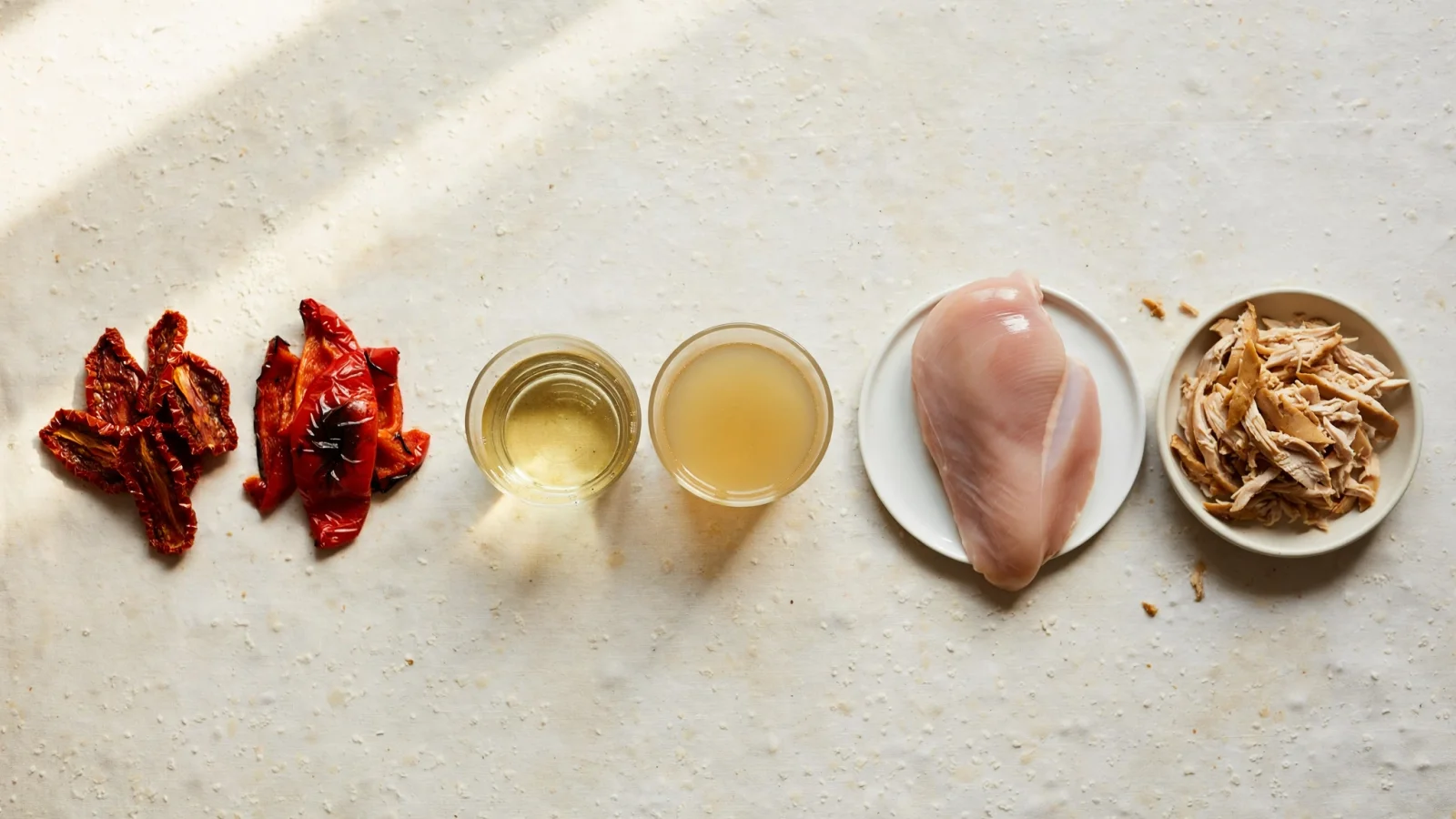
Flexibility keeps this meal practical when your pantry is missing an item. The recipe uses chicken broth to deglaze the pan, though you can use white wine instead; the Food Network's white-wine substitution guide lists broth or stock as a cup-for-cup swap, though broth adds less acidity to the sauce. When sun-dried tomatoes are unavailable or their flavor is too sharp for your preference, jarred roasted red peppers provide a milder, sweeter substitute. Oil-packed sun-dried tomatoes work well alongside dry, shelf-stable ones, though blotting the oil-packed pieces with a paper towel keeps the final cream sauce from becoming greasy.
Heavy cream is the most stable dairy choice for a simmering skillet. Lower-fat options like milk or half-and-half carry a high risk of separating or curdling when mixed with acidic ingredients like tomatoes and then subjected to heat. The higher fat content in heavy cream stabilizes the emulsion, allowing it to bubble gently without breaking, a technique commonly used when making a creamy Tuscan chicken pasta.
Chicken thighs or Italian sausage are reliable options if you prefer a different protein. Adjust the initial searing time to ensure darker meats or sausages cook through completely. Adding a diced jalapeño introduces more heat to the cream base, while stirring in a handful of fresh baby spinach at the very end wilts greens directly into the finished dish. For a faster meal, you can skip handling raw poultry entirely. Use two cups of cooked, shredded rotisserie chicken, stirring it into the skillet near the end of the cooking process to warm it through.
Keeping track of variations and ingredient lists requires an organized digital kitchen. Buttter lets you save recipes from across TikTok, Instagram, YouTube, and Pinterest, automatically pulling the required ingredients into a personal, searchable collection. The platform runs exclusively on iPhone and iPad, offering a free download with an optional subscription for specific AI features. Beyond saving clips, it generates new dish ideas based on ingredients you type in or snap a photo of in your fridge. The app estimates nutrition for your saved meals, scales serving sizes up or down, provides a step-by-step cook mode, and sends your grocery needs directly to Apple Reminders, Things 3, or Todoist. There is no Android or web version, allowing the app to integrate tightly with Apple’s native software.
How to Make the One-Pan Skillet
Layer flavors into the pan, starting with the protein and ending with the delicate pasta. Cut the chicken breasts into bite-sized pieces or thin cutlets, then season them with salt, black pepper, and Italian seasoning. Heat one tablespoon of olive oil in a large skillet over medium-high heat and add the seasoned chicken in an even layer. Let the pieces brown undisturbed for about five minutes before flipping them to sear the other side. This browning process develops a savory crust that forms the flavor foundation for the entire dish, much as it does for a garlic butter chicken stir fry.
The chicken needs to reach a safe internal temperature before you remove it from the pan. The official guidance from FoodSafety.gov requires all poultry to hit 165°F (74°C), so use an instant-read meat thermometer to verify the thickest piece. Once the meat reaches that mark, transfer it to a clean plate and leave the flavorful browned bits, or fond, stuck to the bottom of the skillet.
Lower the stove heat to medium, then add one tablespoon of butter along with the minced garlic to the empty pan. Stir the garlic constantly for about one minute until it softens and smells fragrant. If you are using red pepper flakes, add them now to toast the spices in the hot butter. Next, pour the cup of chicken broth into the skillet to deglaze the pan. Use a wooden spoon to scrape up all the browned bits from the bottom, dissolving them into the broth.
Stir in the heavy cream, grated Parmesan cheese, and chopped sun-dried tomatoes. Bring this combined liquid to a gentle, steady simmer, watching the pan closely so the cream does not boil. Once the liquid bubbles softly, add the 16-ounce package of shelf-stable potato gnocchi. Spread the potato dumplings out evenly so they sit submerged in the sauce.
The gnocchi will cook directly in this simmering liquid. Keep the skillet uncovered and stir gently every minute or two to prevent the pasta from sticking to the bottom. As the potatoes heat up, they release starch into the pan, which thickens the cream mixture into a rich glaze. When the gnocchi reaches a tender texture, return the cooked chicken and any resting juices from the plate back into the skillet. Let everything warm together for one final minute. If you chose to include fresh spinach, fold it in alongside the chicken, turning it through the hot sauce until the leaves wilt.
Keeping Gnocchi Tender
Cooking pasta directly in its sauce requires product-specific attention. Packages of gnocchi behave differently under heat, and relying on a universal minute count often leads to a gummy, overcooked dinner.
Some skillet recipes cook gnocchi directly in sauce for three to five minutes, as in this skillet recipe from The Real Food Dietitians. Other published methods vary widely depending on the author's technique and the brand of pasta. Some instructions tell cooks to cover the pan entirely to trap steam, while others call for boiling the pasta in a separate pot before combining it with the cream. For instance, package directions for Wegmans refrigerated potato gnocchi advise a brief one-minute boil followed by immediate draining. Because of this variation across products, avoid assuming every type of gnocchi can skip a separate pot of boiling water.
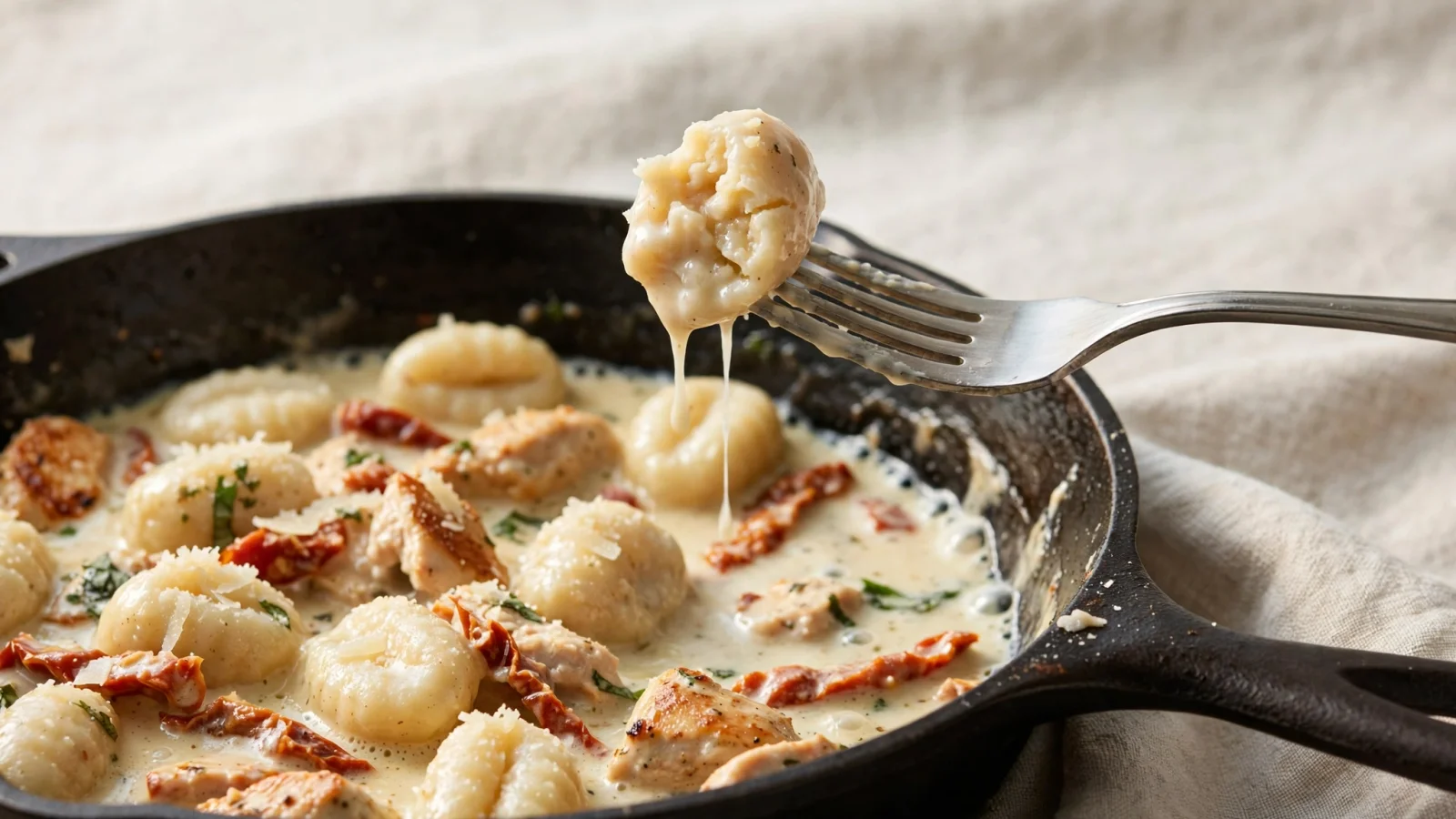
For the shelf-stable potato gnocchi tested in this direct-to-sauce method, begin checking the texture at the three-minute mark. Pull a single piece from the bubbling sauce, let it cool for a few seconds, and bite into it. Stop the cooking process as soon as the center feels tender but still holds its shape. The gnocchi absorbs residual heat while the pan cools on the stove, so pulling the skillet from the burner the moment the pasta is done prevents it from turning into a mushy paste.
The consistency of your sauce also dictates the cooking timeline, as the liquid must remain loose enough to transfer heat into the gnocchi. If your cream mixture reduces and thickens into a tight paste before the potatoes are tender, the pasta will scorch against the hot metal rather than simmer. Fix an over-thickened sauce by adding a small splash of warm chicken broth and stirring gently to incorporate the liquid without breaking the dumplings. Do not keep the pan simmering on the stove to reduce a thin sauce further, because extended heat will overcook the gnocchi and ruin the texture of the dish.
Storage and Reheating
Leftovers require slightly different handling than the fresh meal, primarily because potato gnocchi acts like a sponge. As the food cools and sits in the refrigerator, the pasta absorbs the cream and broth. By the next day, the sauce will be noticeably thicker, and the potato pieces will be softer than they were right out of the skillet.
Store the remaining portions in an airtight container in the refrigerator for up to three days. Freezing this specific dish often yields poor results, as the heavy cream tends to separate into a grainy texture when thawed and the saturated gnocchi often disintegrates.
When you are ready to eat the leftovers, reheat the dish gently on the stove over low heat. Pour a fresh splash of chicken broth or a little extra heavy cream into the pan to loosen the tightened sauce. Stir the food gently with a wooden spoon until the chicken and gnocchi are hot all the way through. Microwaving the meal on a high setting causes the dairy to separate and the chicken breasts to dry out, making a slow, controlled warm-up in a skillet the better choice for preserving the texture.
Marry Me Chicken Gnocchi FAQs
This dish functions as a fast, creamy skillet dinner, distinct from the broth-based soup variations. The direct-to-sauce cooking method works for shelf-stable potato gnocchi, but it does not apply to every pasta type on the grocery store shelf, which requires some adjustments and troubleshooting depending on your ingredients.
Can you cook gnocchi directly in the sauce?
Shelf-stable potato gnocchi cooks directly in a simmering cream and broth mixture. As the pasta heats up, it releases starch into the pan, thickening the surrounding liquid into a glaze while the dumplings soften. Keep the sauce loose enough to prevent the ingredients from scorching on the bottom.
Do you need to boil gnocchi before adding it?
You need to boil the gnocchi only if your specific package requires that step. The shelf-stable version tested here cooks directly in the skillet, but refrigerated or frozen varieties often specify a brief, separate boil. Follow the manufacturer's guidance on the packaging if their instructions demand a pot of boiling water.
How do you keep gnocchi from getting gummy?
Maintain a gentle simmer and rely on a physical bite test rather than a strict timer. Start checking the texture at the three-minute mark. Pull the skillet completely off the heat the moment the gnocchi feels tender in the center, because the residual heat in the pan and the hot cream will continue to soften the potatoes even after the stove is off.
Can you use rotisserie chicken?
You can substitute two cups of cooked, shredded rotisserie chicken for the raw chicken breasts. Skip the initial searing and browning step entirely. Build the garlic, broth, and cream sauce in the skillet, cook the gnocchi until tender, and stir the cooked rotisserie chicken in at the very end to warm it through before serving.
What can replace the white wine?
Chicken broth serves as the best replacement for white wine in this pan sauce. It provides the necessary liquid volume to deglaze the skillet and simmer the gnocchi without altering the savory flavor profile. Adding a small squeeze of fresh lemon juice alongside the broth can replicate the missing acidity of the wine.
Is this a skillet dinner or a soup?
This is a creamy skillet dinner. It relies on a concentrated reduction of heavy cream and chicken broth designed to coat the meat and pasta, rather than the much larger volume of thin liquid found in a soup. The lower liquid ratio allows the starch from the potatoes to create a thick, clinging sauce.
Saved a dinner video without a recipe card? Buttter can turn supported clips into structured ingredients and steps, then help keep everything together in a searchable digital cookbook. Download Buttter for iPhone and iPad at Buttter.app to organize your recipes, estimate nutrition, and send your grocery lists straight to Apple Reminders.
