
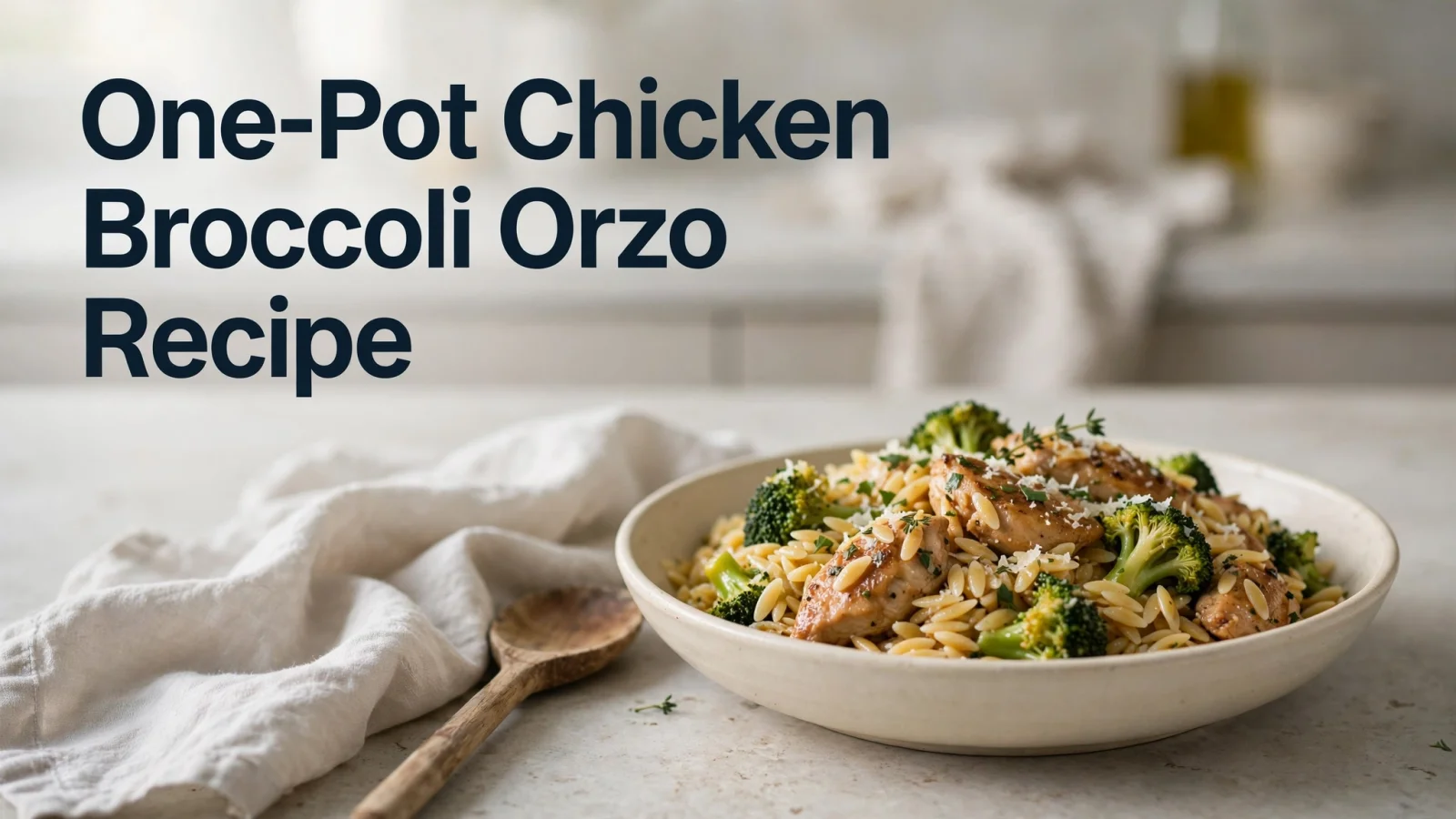
One-Pot Chicken Broccoli Orzo Recipe
Make a one-pot chicken broccoli orzo with a clear broth-to-orzo ratio, flexible broccoli timing, and easy swaps for fresh or frozen florets.
By Buttter ·
A short food video makes dinner look simple. A cook tosses browned poultry, vibrant green vegetables, and pasta into a single pan, producing a creamy meal minutes later. Replicating that result on a Tuesday night requires more than visual inspiration, because you need exact ingredient amounts, a reliable liquid ratio, and a clear sequence of steps. Without those details, a promising one-pot dish often turns into undercooked pasta or mushy vegetables.
Turning visual inspiration into a structured chicken broccoli orzo recipe takes the guesswork out of weeknight cooking. Establishing a clear, written method prevents you from ruining good ingredients through trial and error while pausing a fast-paced video with messy hands.
Buttter bridges this gap for iPhone and iPad users. The app turns supported social posts and cooking videos into structured ingredients and numbered steps, even when the original clip lacks written instructions. This lets you bypass the scattered digital mess of saved links and screenshots. By organizing your saved meals into searchable personal cookbooks, you can start cooking immediately with clear guidance.
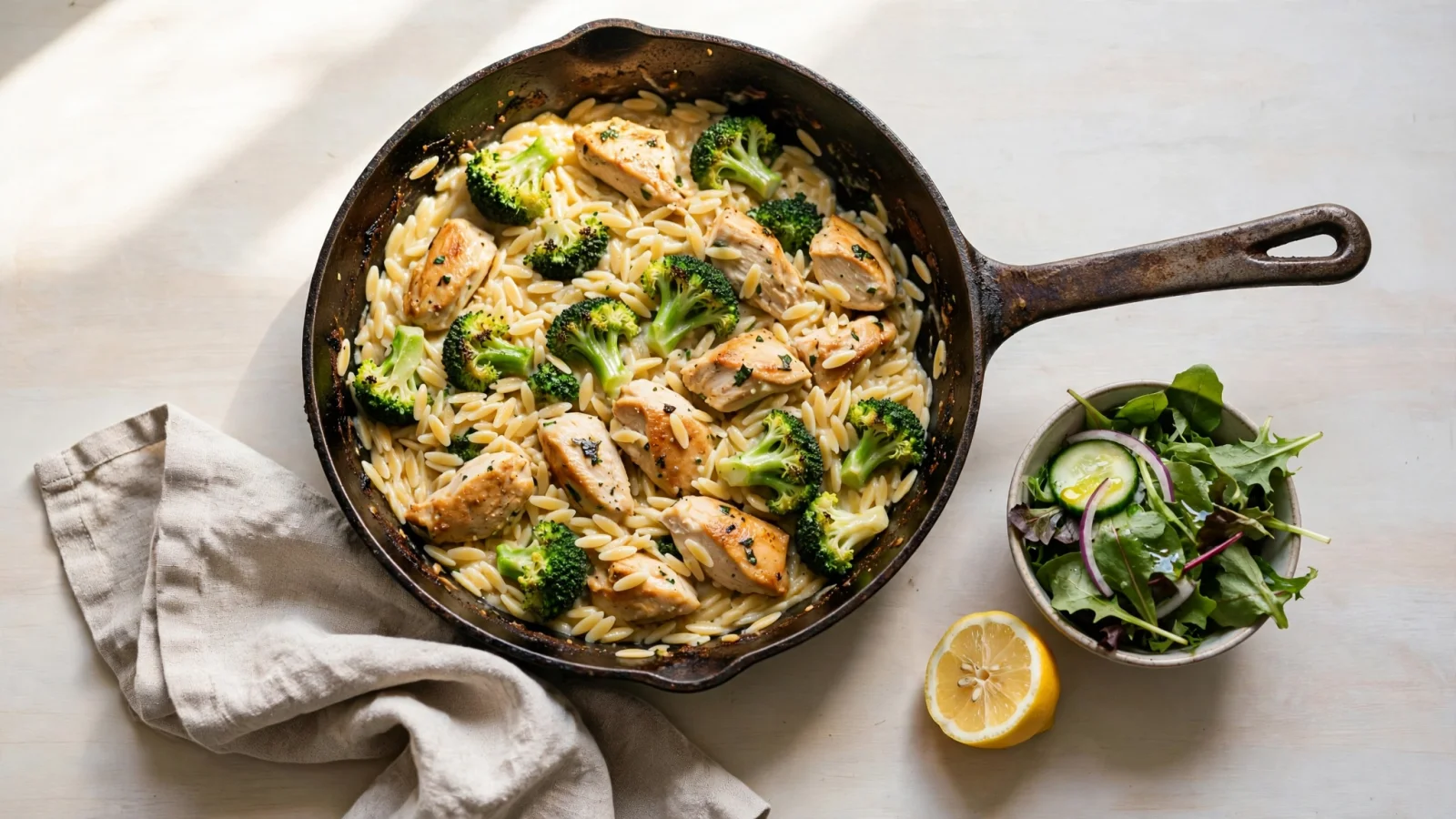
One-Pot Chicken Broccoli Orzo Recipe
Before altering quantities or swapping vegetables, establish a reliable baseline. This test batch targets four portions and uses a large, deep skillet with a tight-fitting lid. Using a wide pan ensures the pasta cooks evenly in a shallow layer of liquid rather than piling up in a deep pot, helping you understand how the dish behaves before you experiment with variations.
The working ingredient list requires specific prep work before you turn on the stove:
- 1 pound boneless chicken breast or thighs, cut into uniform bite-size pieces
- 1½ cups dry orzo
- 3 cups low-sodium chicken broth, plus up to ½ cup warm broth held back
- 3 cups small fresh broccoli florets, trimmed to equal sizes
- 1 small yellow onion, finely diced
- 2 cloves garlic, minced
- Salt and black pepper, to taste
- ½ cup freshly grated Parmesan or sharp cheddar cheese
- 1 tablespoon olive oil or butter for cooking
- Juice of half a lemon
- 2 tablespoons heavy cream (optional)
Preparing all your ingredients in advance prevents the garlic from burning while you chop the vegetables, since the cooking sequence moves quickly once the pan gets hot. You brown the seasoned poultry in the skillet until fully cooked, then transfer it to a resting plate. Using that same pan, you soften the onion and garlic before lightly toasting the dry pasta. Pouring in the three cups of broth deglazes the pan and starts the absorption process. Bring the liquid to a simmer, cover the skillet, and let the pasta cook while checking it periodically.
Adding the fresh florets partway through the simmering time gives you complete control over their final texture. Once the pasta is tender and the vegetables are bright green, return the cooked meat to the pan to warm through. Stirring in the cheese, lemon juice, and optional cream off the heat creates a rich finish without causing the dairy to separate into a greasy layer.
Ingredients and Practical Swaps
Each core component plays a specific role in the final texture and flavor of the dish. Boneless, skinless thighs remain tender during a rapid sauté and withstand the residual heat of the pan beautifully. Breasts offer a leaner profile but require careful monitoring to avoid drying out before they hit the resting plate. If you prefer to use leftover roasted meat or rotisserie poultry, skip the initial browning step entirely, folding the pre-cooked meat into the skillet during the final two minutes to warm it through safely.
The cheese selection directs the overall flavor profile of the sauce. Parmesan delivers a sharp, salty finish that complements the lemon juice and keeps the dish feeling light on the palate, whereas sharp cheddar pushes the meal closer to the comforting profile of a classic broccoli cheddar soup. Grate your cheese from a solid block rather than buying bags of pre-shredded cheese, because bagged shreds contain anti-caking agents that prevent them from melting smoothly into a hot liquid. Since aged cheeses and store-bought broths carry their own salt content, wait until the very end to taste the finished dish before adding any additional salt to the pan.
Dairy additions remain flexible based on your dietary preferences. The optional heavy cream adds a luxurious texture, though you can omit it completely for a lighter result. Finishing the pan with an extra drizzle of high-quality olive oil and a heavy squeeze of lemon juice provides plenty of richness and acidity without requiring any milk or cream. Avoid substituting coconut milk unless you want a distinctly sweet, tropical flavor profile that clashes with the Italian-inspired base.
Vegetable choices dictate adjustments to your timing and preparation. Fresh florets hold their shape well and provide a distinct crunch when added late in the cooking process. Frozen vegetables introduce excess water into the pan as their external ice crystals melt into the sauce, so thawing them completely in a colander and draining them before use prevents that extra moisture from watering down your precise liquid ratio.
Plant-based variations work well with this one-pot method. Replacing the poultry entirely with drained white beans or chickpeas creates a hearty vegetarian main course. Adding the beans at the same time you pour in the broth allows them to absorb the savory flavors, and stirring in half a cup of frozen peas alongside the primary vegetables adds sweetness and a pop of color without requiring any extra cooking time on the stove.
Get the Broth-to-Orzo Ratio Right
The success of any one-pot pasta dish depends heavily on the liquid math. Orzo resembles rice in shape but cooks like traditional wheat pasta, releasing thick starches into the cooking liquid as it softens. Trapping that starchy liquid in the pan rather than boiling it in a massive pot and draining it down the sink thickens it into a natural, glossy sauce. Never rinse your dry pasta before adding it to the skillet, as washing away that surface starch ruins the creamy texture.
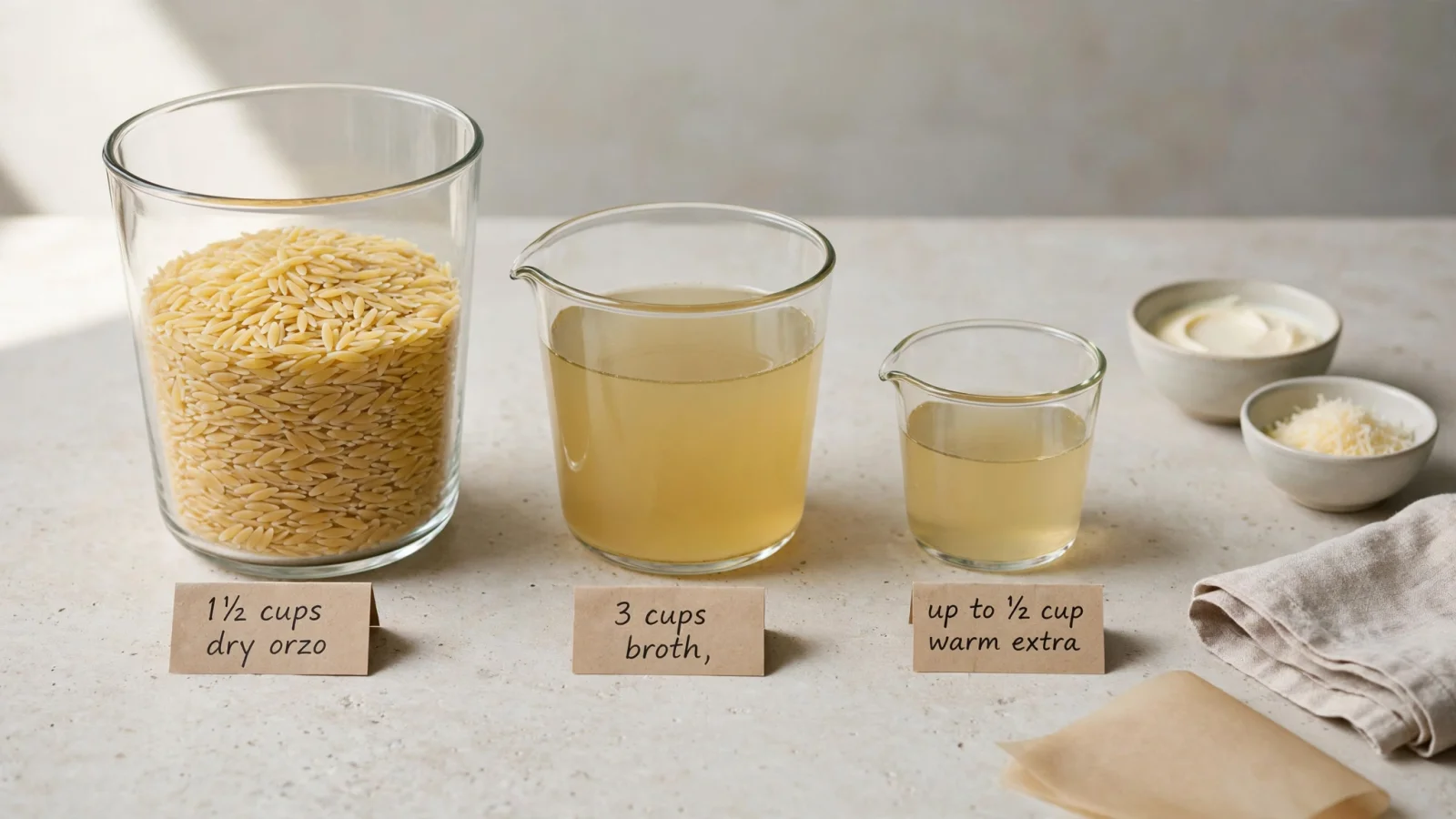
A reliable starting point for a covered, absorption-style method uses two parts liquid to one part dry pasta. Following this baseline, one and a half cups of dry orzo require three cups of broth. This ratio assumes you keep a lid on the skillet to minimize evaporation during the simmer, trapping the steam inside the cooking environment.
Recipe-specific variations often adjust this baseline based on the cooking vessel and dairy inclusions. Some casserole-style dishes rely on a higher volume of combined broth and milk, reaching nearly two and a third cups of liquid per cup of pasta. Because this specific recipe keeps the cream optional and adds it only after the pasta is tender, the required broth amount remains clear and easy to measure. If you decide to simmer milk in the pan alongside the broth, count that milk as part of your total liquid calculation.
Variables in your kitchen alter how quickly the liquid disappears from the pan. A very wide skillet exposes more surface area, leading to faster evaporation than a narrow Dutch oven. A lid that sits loosely allows steam to escape, while a heavy, tight-fitting lid forces moisture back down into the food. Different brands of pasta also absorb moisture at slightly different rates due to their specific wheat blends and extrusion methods.
Keeping up to half a cup of extra warm broth nearby gives you an easy way to adjust the pan in real time. If the skillet looks completely dry while the pasta still feels crunchy in the center, pour in a splash of the reserved liquid to finish the cooking process without scorching the bottom layer.
Managing these precise ratios becomes much easier when your digital cookbook organizes them clearly. When you use Buttter for saving recipes from TikTok, the platform extracts the messy text and rapid video captions into structured measurements. You see the specific liquid volume the creator used, allowing you to replicate their ratio and cooking method without guessing.
Cook the Chicken, Orzo, and Broccoli
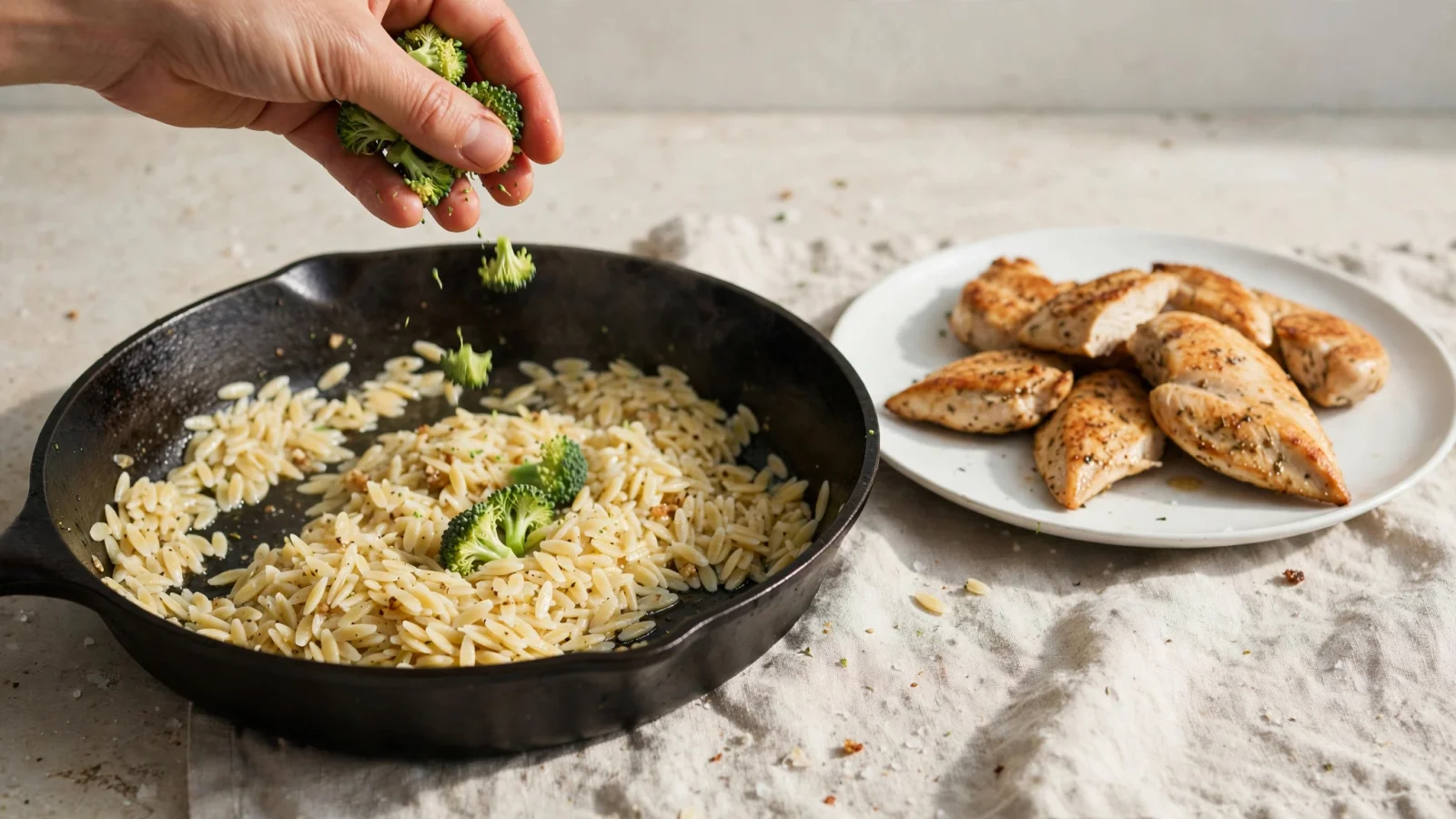
Execution dictates the final quality of the meal, starting with proper heat management. Heat your oil or butter in the skillet over medium-high heat until it shimmers. Season your bite-size pieces of meat evenly with salt and pepper, then arrange them in a single layer in the pan. Letting them sear undisturbed for three to four minutes develops a browned crust that adds deep, roasted flavor to the entire dish.
Check the meat before moving on to the next phase, ensuring the poultry reaches a safe internal temperature of 165°F (74°C) on a calibrated food thermometer. Once the meat hits that target, remove it to a plate immediately, because leaving the fully cooked pieces in the pan while the pasta boils will turn them tough and dry, ruining the texture of your protein.
Lower the heat to medium and add the diced onion to the residual fat in the skillet. Once the onion softens and turns translucent, stir in the minced garlic and cook briefly, until fragrant, then add the dry pasta. Toast the orzo for two minutes, stirring, to coat it in the savory fat and add a subtle nutty flavor.
Pour the three cups of broth into the skillet, scraping the bottom vigorously with a wooden spoon. This motion releases any browned bits left behind from the meat, incorporating that concentrated flavor directly into the cooking liquid. Bring the liquid to a gentle simmer, cover the pan, and set a timer for the package's recommended cooking time. Remove the lid occasionally to stir, so the orzo doesn't stick to the bottom of the hot skillet.
Your preference determines when the vegetables enter the pan. Adding fresh florets during the final four minutes of simmering keeps them bright green with a distinct, firm bite, while pushing them down into the liquid ensures they steam evenly in the trapped heat. If you prefer softer, more integrated vegetables that melt into the sauce, add them earlier in the cooking process. Frozen florets only need enough time in the hot pan to heat through completely, so they should go in during the final two minutes.
Once the pasta achieves a tender bite and most of the liquid has absorbed into a loose sauce, remove the skillet from the heat completely. Return the resting meat and any accumulated juices from the resting plate to the pan. Stirring in the cheese, lemon juice, and optional cream off the active heat prevents the sauce from separating or turning grainy, preserving a smooth finish.
Adjust the Texture, Serve, and Scale
One-pot meals require visual judgment right before you serve them. The target consistency is a creamy, cohesive dish where the pasta is fully cooked but not mushy, and the vegetables remain distinct and vibrant. If the mixture looks too soupy when the pasta finishes cooking, leave the skillet uncovered. Simmer the contents over low heat while stirring constantly for another minute or two, allowing the excess surface moisture to evaporate.
Resting the dish improves the final texture and prevents you from serving boiling-hot food. Letting the skillet sit off the heat for three to five minutes gives the starches time to settle and thicken the remaining liquid. A sauce that looks slightly loose immediately after cooking often tightens into a rich coating after a short rest on the counter. If the pasta tightens too much and becomes sticky during this resting phase, a small splash of your reserved warm broth will loosen it right back up.
Serve the meal in wide, shallow bowls to showcase the varied ingredients. Because this skillet acts as a complete main course containing protein, carbohydrates, and vegetables, you only need a crisp green salad to finish the table. Extra lemon wedges and a block of hard cheese at the table allow everyone to adjust the brightness and saltiness of their own portion to their liking.
Increasing the yield requires careful attention to your pan size and liquid volumes. You can confidently double the solid ingredients to serve a larger group, but liquid evaporation does not scale in a linear way. When you move to a larger cooking vessel for a double batch, you may find you need slightly less than a direct doubling of the broth because a deeper layer of liquid evaporates more slowly. Keep a full cup of extra warm broth nearby, adding it gradually if the larger pan dries out prematurely.
Storing leftovers requires knowing how the starches behave in the refrigerator overnight. The pasta will continue to absorb any loose sauce as it chills, resulting in a dense block the next day. Reheating a portion gently on the stove over low heat with a heavy splash of water or fresh broth restores the creamy consistency. You can use this reheating method for similar dairy-heavy dishes, much like reviving a cold creamy Tuscan chicken pasta or a thick risotto.
Bridging the gap between an inspiring video and a practical dinner becomes manageable with the right tools. Buttter saves your favorite supported social posts and videos, transforming clips that lack written recipes into structured ingredients and actionable steps. You can build searchable personal cookbooks, organize your weeknight dinner ideas, and even generate new dishes from a photo of the ingredients currently sitting in your fridge or pantry. The app scales your servings automatically, displays estimated nutrition data, features a step-by-step Cook mode, and sends your grocery needs directly to Apple Reminders or Things 3. Buttter is available exclusively for iPhone and iPad and is free to download, with an optional subscription required for some advanced AI features. There is no web or Android version. Download Buttter today at https://buttter.app and start turning your saved ideas into meals you can cook with confidence.
